 Back
Back

Anyone can deliver content. Not everyone can deliver real learning.
In an economy reshaped by AI, rapid change, and constant reskilling, Singapore’s adult educators (AEs) play a more critical role than ever in helping workers stay employable and organisations remain competitive.
Positioned at the heart of the SkillsFuture movement, AEs help meet evolving skills needs through learning experiences that support workforce and enterprise transformation. Their ability to teach well, adapt content meaningfully, and connect learning to workplace realities has a direct impact on both learning and business outcomes.
But to do this well, AEs must push forward. Like the workforce they are helping to train, they must commit to continuous growth, deepen their professional practice, and stay ahead in both domain expertise and pedagogical relevance.
In an economy reshaped by AI, rapid change, and constant reskilling, Singapore’s adult educators (AEs) play a more critical role than ever in helping workers stay employable and organisations remain competitive.
Positioned at the heart of the SkillsFuture movement, AEs help meet evolving skills needs through learning experiences that support workforce and enterprise transformation. Their ability to teach well, adapt content meaningfully, and connect learning to workplace realities has a direct impact on both learning and business outcomes.
But to do this well, AEs must push forward. Like the workforce they are helping to train, they must commit to continuous growth, deepen their professional practice, and stay ahead in both domain expertise and pedagogical relevance.
From one-off certifications to sustained professional development
That sets the context for the Training and Adult Educator Professional Pathway (TAEPP), led by the Institute for Adult Learning (IAL) with the support of SkillsFuture Singapore (SSG) as the latest step in its long-running efforts to strengthen professionalism in the Training and Adult Education (TAE) sector.
Since its establishment, IAL has steadily built up the sector through certifications, professional development programmes, and earlier initiatives that recognised adult educators at different levels of skills and competence. But in an era shaped by AI and rapid technological disruption, this work has taken on a new urgency.
“Now, as technology and approaches to adult learning evolve, our Adult Educators themselves must keep upgrading, to keep up with industry developments and new training methods. The one-off certification programme we have today will not be enough,” emphasised Minister for Education, Mr Desmond Lee at the SkillsFuture Opening Forum 2025. TAEPP is introduced in response to this shift, as what he described as “a SkillsFuture framework for SkillsFuture Educators.”
At its core, TAEPP is meant to ensure that AEs continue reskilling and upskilling throughout their careers. As part of the framework, IAL has introduced the National Adult Educator (NAE) Registry as a national benchmark to uphold the quality and standards of AEs. From 1 April 2026, AEs who wish to deliver SSG-supported programmes must be on the NAE Registry. To remain on it, they must renew their status every two years by meeting TAEPP requirements, including at least 40 hours of continuing professional development and 80 hours of practice.
A trusted national benchmark to ensure continual upskilling
As of March 2026, more than 9,000 AEs, including individual practitioners and AEs from training organisations and industries, have registered with the NAE Registry under TAEPP. This is a strong early signal of the sector's support behind the framework.
The response reflects the value TAEPP offers: a more structured pathway for skills development, professional practice, and access to more training opportunities.
The NAE Registry, a centrepiece of the framework, serves as a consolidated database of qualified and practising AEs. It provides a trusted national benchmark and gives training providers, employers and other stakeholders greater confidence in the quality of those delivering SSG-supported programmes.
TAEPP also places strong emphasis on continual upskilling. It encourages certified AEs to keep building both pedagogical and domain capabilities so they remain relevant, effective and responsive to changing workforce and enterprise needs. In doing so, it helps them stay current with industry developments, technological shifts and evolving learning trends.
Lastly, TAEPP widens pathways for AEs to deliver SSG-supported programmes. Sector professionals may register under the framework if they have attained the relevant Accelerated Industry-centric Training Pathway certification for their fields. By creating a pathway for industry experts to serve as AEs, TAEPP allows learners to benefit from current industry expertise while ensuring that training remains anchored in a professional framework.
Training organisations getting on board
These shifts are already felt on the ground, shaping how the sector thinks about credibility, capability, and professional growth.
Among organisations already on board are ROHEI Learning & Consulting and SeraphCorp Institute, both of which see TAEPP as more than a formal requirement. For them, it is part of a broader move to strengthen educator capability and raise the quality of learning.
The response reflects the value TAEPP offers: a more structured pathway for skills development, professional practice, and access to more training opportunities.
The NAE Registry, a centrepiece of the framework, serves as a consolidated database of qualified and practising AEs. It provides a trusted national benchmark and gives training providers, employers and other stakeholders greater confidence in the quality of those delivering SSG-supported programmes.
TAEPP also places strong emphasis on continual upskilling. It encourages certified AEs to keep building both pedagogical and domain capabilities so they remain relevant, effective and responsive to changing workforce and enterprise needs. In doing so, it helps them stay current with industry developments, technological shifts and evolving learning trends.
Lastly, TAEPP widens pathways for AEs to deliver SSG-supported programmes. Sector professionals may register under the framework if they have attained the relevant Accelerated Industry-centric Training Pathway certification for their fields. By creating a pathway for industry experts to serve as AEs, TAEPP allows learners to benefit from current industry expertise while ensuring that training remains anchored in a professional framework.
Training organisations getting on board
These shifts are already felt on the ground, shaping how the sector thinks about credibility, capability, and professional growth.
Among organisations already on board are ROHEI Learning & Consulting and SeraphCorp Institute, both of which see TAEPP as more than a formal requirement. For them, it is part of a broader move to strengthen educator capability and raise the quality of learning.
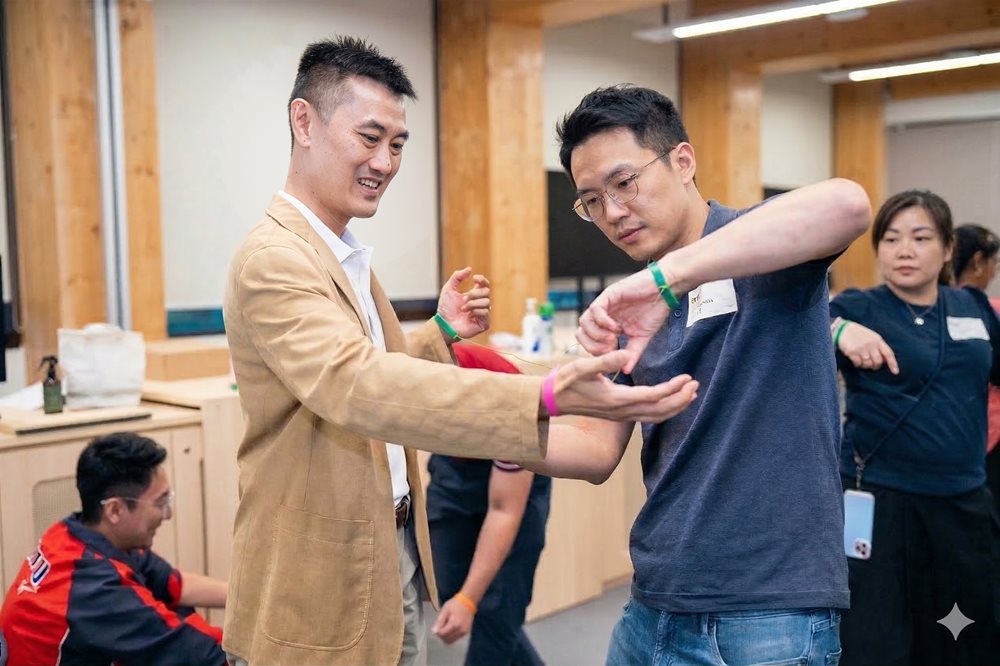
ROHEI Principal Consultant Wen-Wei Chiang (left) guiding a learner through an activity. (Photos by ROHEI)
For ROHEI Learning & Consulting, TAEPP aligns closely with how the organisation already views adult education: as a craft that demands continuous growth, reflection, and care in practice. That, in turn, shapes the quality of the learner experience.
Mr Joel Mok, Director of Product at ROHEI, shares, “Adult education is evolving. Beyond subject-matter expertise, AEs today are expected to understand learning design, facilitation practices, and the broader context in which learning takes place. TAEPP helps clarifies these expectations and encourages the intentional growth of our trainers.”
That mindset is reflected in how ROHEI supports its adult educators. Facilitators give one another peer feedback after sessions, meet regularly as a community of practice to exchange facilitation approaches, and receive support for further professional learning, whether partly or fully funded.
Mr Joel Mok, Director of Product at ROHEI, shares, “Adult education is evolving. Beyond subject-matter expertise, AEs today are expected to understand learning design, facilitation practices, and the broader context in which learning takes place. TAEPP helps clarifies these expectations and encourages the intentional growth of our trainers.”
That mindset is reflected in how ROHEI supports its adult educators. Facilitators give one another peer feedback after sessions, meet regularly as a community of practice to exchange facilitation approaches, and receive support for further professional learning, whether partly or fully funded.
-(1).jpg?width=1000&height=667)
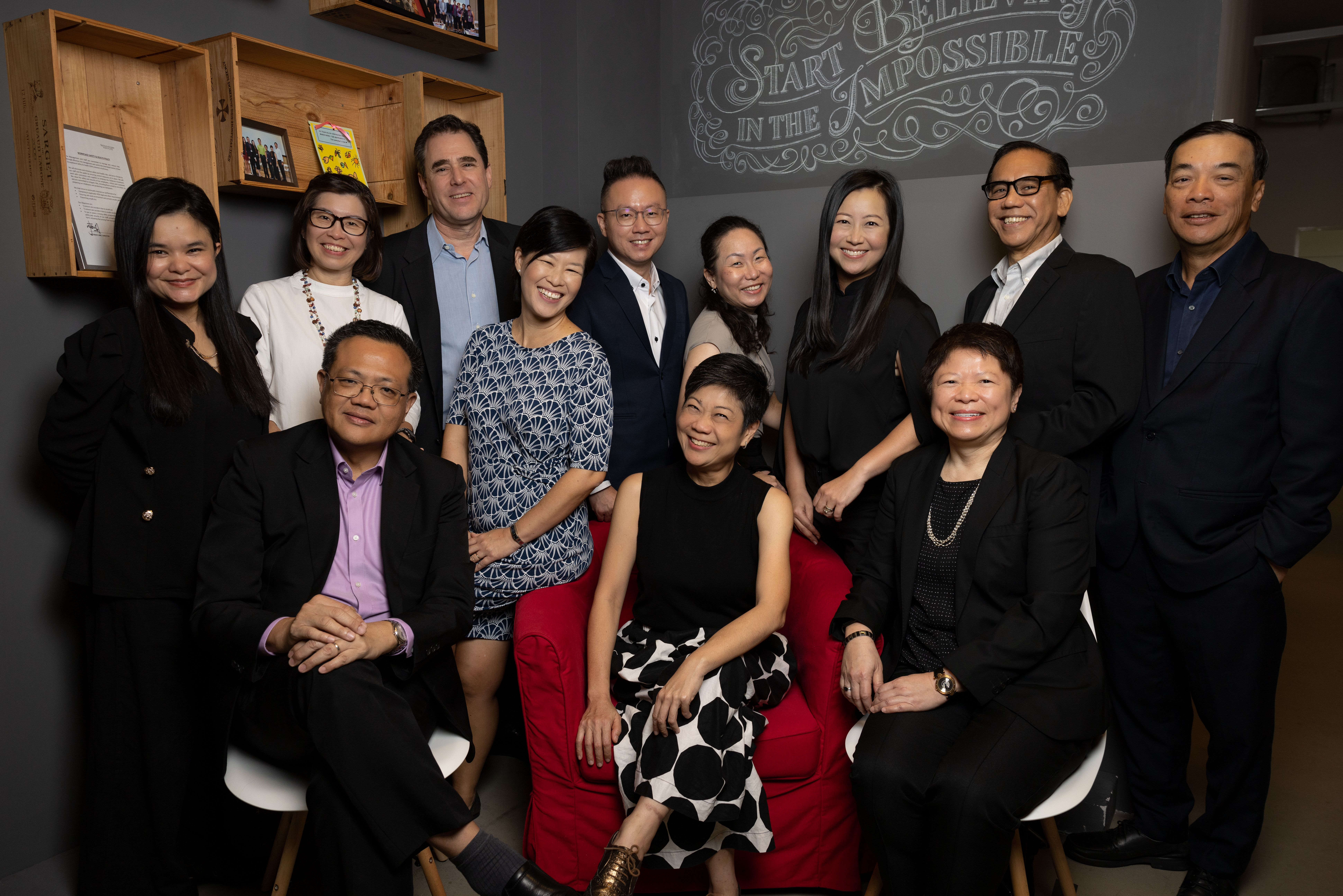
Seraphcorp’s faculty of adult education craftsmen who have much more to offer than glorious war stories. (Photo by Seraphcorp)
At SeraphCorp Institute, where leadership development is a core focus, adult education is viewed in similarly professional terms. “AEs are craftsmen in the art of facilitated adult learning,” says Ms Karen Lam, Director of Learning. “TAEPP sends a long overdue signal that AEs are not just retired professionals telling their war stories, and not something you do when you cannot find another job. This is a profession.”
SeraphCorp also sees TAEPP as a differentiator in attracting and developing talent. “By embracing TAEPP, we position ourselves as an employer of choice as it reflects the value we place on our faculty and their skills,” Ms Lam says. “This also allows us to model the continuous learning we wish to encourage in our learners. If our faculty love learning — and they do — they can inspire our learners to keep learning too.”
That commitment matters because, as Ms Lam points out, AEs cannot afford to stand still. “If you view AEs as specialist craftsmen, there is always room for further development,” she says. “The business environment that our learners operate in is always changing. Learners themselves are also changing, whether in terms of their exposure to technology or changes in the external environment. We constantly have to keep learning to keep up with what is relevant, both in content and in how we facilitate learning. Being part of a professional community like what TAEPP aims to create is essential to honing our craft.”
SeraphCorp also sees TAEPP as a differentiator in attracting and developing talent. “By embracing TAEPP, we position ourselves as an employer of choice as it reflects the value we place on our faculty and their skills,” Ms Lam says. “This also allows us to model the continuous learning we wish to encourage in our learners. If our faculty love learning — and they do — they can inspire our learners to keep learning too.”
That commitment matters because, as Ms Lam points out, AEs cannot afford to stand still. “If you view AEs as specialist craftsmen, there is always room for further development,” she says. “The business environment that our learners operate in is always changing. Learners themselves are also changing, whether in terms of their exposure to technology or changes in the external environment. We constantly have to keep learning to keep up with what is relevant, both in content and in how we facilitate learning. Being part of a professional community like what TAEPP aims to create is essential to honing our craft.”
A maturing profession
For AEs, the value of TAEPP is both practical and professional. It helps them stay current through continuous development and sustained practice, while giving them a clearer pathway for growth. Just as importantly, it signals that their work matter, that adult education is a profession, not simply a role people drift into.
This matters for the wider sector too. TAEPP sets clearer expectations for quality and professionalism, gives providers and employers greater confidence in trainer standards, and strengthens trust in the CET ecosystem. For learners, that means more credible, relevant, and consistent learning experiences.
As Singapore navigates rapid change, TAEPP marks another step in the maturing of the TAE sector: one where AEs are recognised as professionals who continually sharpen their craft, stay current in both industry and pedagogy, and play a vital role in workforce transformation. In an age of AI and disruption, the sector’s real edge lies not in technology alone, but in the professionalism of the people who make learning meaningful.
This matters for the wider sector too. TAEPP sets clearer expectations for quality and professionalism, gives providers and employers greater confidence in trainer standards, and strengthens trust in the CET ecosystem. For learners, that means more credible, relevant, and consistent learning experiences.
As Singapore navigates rapid change, TAEPP marks another step in the maturing of the TAE sector: one where AEs are recognised as professionals who continually sharpen their craft, stay current in both industry and pedagogy, and play a vital role in workforce transformation. In an age of AI and disruption, the sector’s real edge lies not in technology alone, but in the professionalism of the people who make learning meaningful.
Find out more about the TAEPP here.