 Back
Back
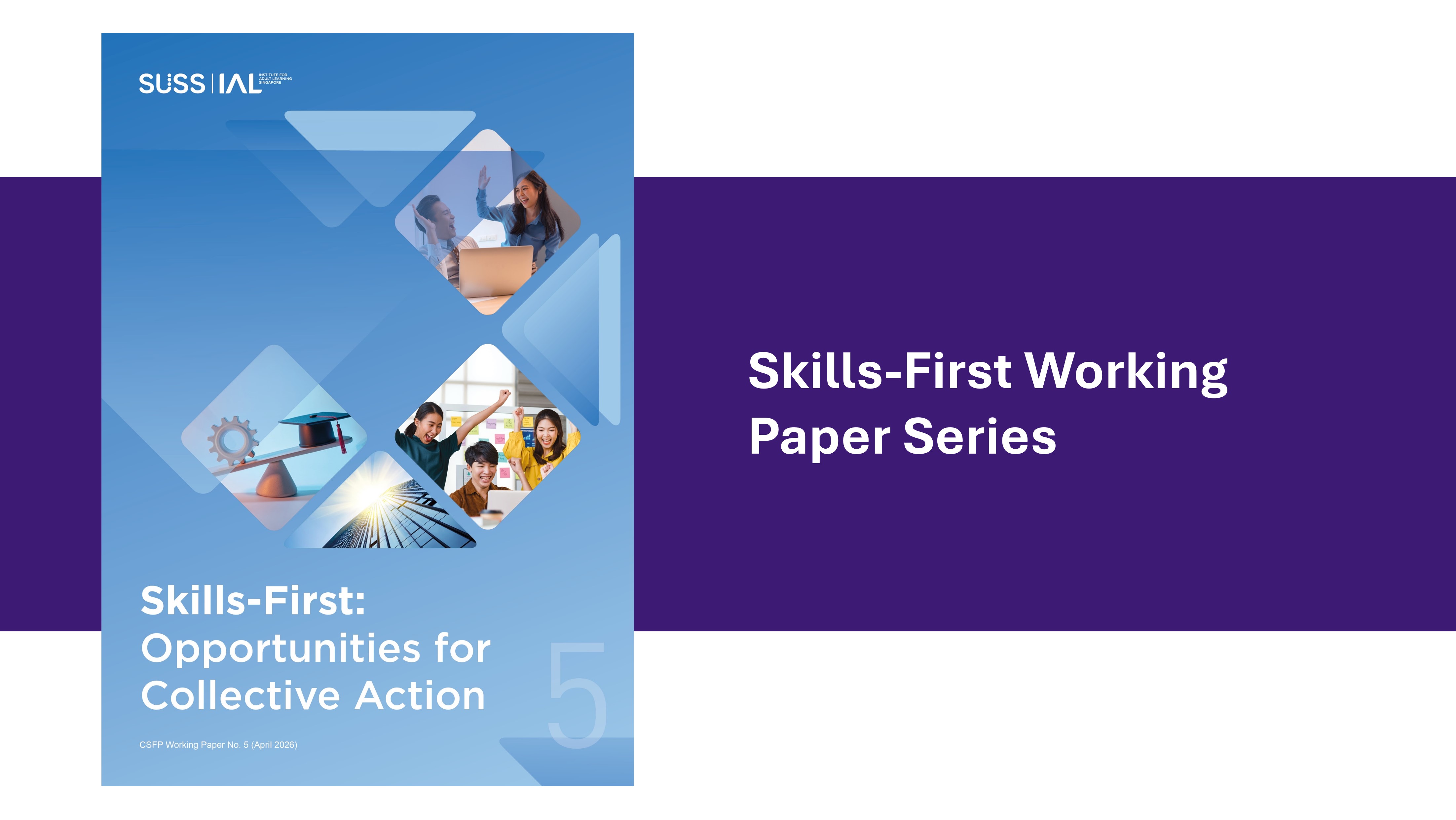
Abstract
Singapore has invested extensively in a comprehensive skills ecosystem spanning national skills frameworks, a robust Continuing Education and Training infrastructure, enterprise transformation programmes, training subsidies, career services and digital systems. Yet the adoption of skills-first practices remains uneven and often nascent, particularly among SMEs and individuals. This paper argues that the binding constraint is weak ecosystem coordination - specifically, the disconnection between skills development, employment, and enterprise transformation. Fragmented incentives, standards, and workflows prevent skills-first behaviours from becoming routine. To address these gaps, the paper proposes the following four ecosystem-level collective actions:
- Make training count towards business outcomes by shifting CET from participation-led to outcome-oriented capability models and strengthening applied learning and skills validation.
- Build career resilience for individuals by strengthening portable skills signalling, aligning guidance and placement around adjacent career pathways, and rewiring incentives towards progression.
- Integrate business strategy with people strategy by normalising skills-first as a default way of organising work and reinforcing skills utilisation beyond hiring decisions.
- Develop collective outcome measures for enterprises and individuals to track behavioural change and enable credible feedback loops.
Authors

May Lim
Assistant Provost, Singapore Institute of Technology
A/Prof May Lim is an applied learning leader and educator, and a strong advocate for advancing skills-first practices through robust skills validation and assessment. Her work integrates curriculum innovation, industry collaboration, and competency-based approaches to strengthen learner employability and growth. She is Assistant Provost (Applied Learning) at SIT, teaches in occupational therapy, and takes pride in building a coaching ecosystem.
A/Prof May Lim is an applied learning leader and educator, and a strong advocate for advancing skills-first practices through robust skills validation and assessment. Her work integrates curriculum innovation, industry collaboration, and competency-based approaches to strengthen learner employability and growth. She is Assistant Provost (Applied Learning) at SIT, teaches in occupational therapy, and takes pride in building a coaching ecosystem.

Xu Wenshan
Director, Enterprise Engagement Division, SkillsFuture Singapore
Wenshan has more than 20 years of experience across various public sector agencies, specialising in manpower, education, and training. As Director (Enterprise Engagement Division) at SkillsFuture Singapore, Wenshan oversees the promotion and adoption of skills-first practices in enterprises and continues to foster strong collaboration with strategic partners towards this aim.
Wenshan has more than 20 years of experience across various public sector agencies, specialising in manpower, education, and training. As Director (Enterprise Engagement Division) at SkillsFuture Singapore, Wenshan oversees the promotion and adoption of skills-first practices in enterprises and continues to foster strong collaboration with strategic partners towards this aim.

Cindy Lee
Senior Vice President & Country Manager, The Adecco Group
Cindy Lee is the Senior Vice President (SVP) and Country Manager of Adecco Singapore. With over 29 years of rich experience across industries and functions, including leadership roles spanning APAC and the Middle East, Cindy thrives on leading change, developing talent, and creating synergies that empower organizations to excel.
Cindy Lee is the Senior Vice President (SVP) and Country Manager of Adecco Singapore. With over 29 years of rich experience across industries and functions, including leadership roles spanning APAC and the Middle East, Cindy thrives on leading change, developing talent, and creating synergies that empower organizations to excel.

Sim Soo Kheng
Director, Centre for Workplace and Learning Innovation, Institute for Adult Learning
As Director of IAL’s Centre for Workplace and Learning Innovation, Soo Kheng leverages innovation to raise learning outcomes for adults in work and business performance. This includes developing a dynamic learning innovation ecosystem to advance adoption of progressive teaching and training practices based on experimentation, research and technological affordances.
As Director of IAL’s Centre for Workplace and Learning Innovation, Soo Kheng leverages innovation to raise learning outcomes for adults in work and business performance. This includes developing a dynamic learning innovation ecosystem to advance adoption of progressive teaching and training practices based on experimentation, research and technological affordances.

Maria Flynn
President & CEO, Jobs for the Future
Maria Flynn is president & CEO of Jobs for the Future. Her commitment to JFF’s vision of equitable economic advancement for all and leadership in workforce policy have made her a national authority on the future of work, the role of technology in the labor market and career pathways for learners and workers underserved by the education and workforce systems.
Maria Flynn is president & CEO of Jobs for the Future. Her commitment to JFF’s vision of equitable economic advancement for all and leadership in workforce policy have made her a national authority on the future of work, the role of technology in the labor market and career pathways for learners and workers underserved by the education and workforce systems.
Your Opinions Matter!
Explore more research and insights from our Skills First Papers.