 Back
Back
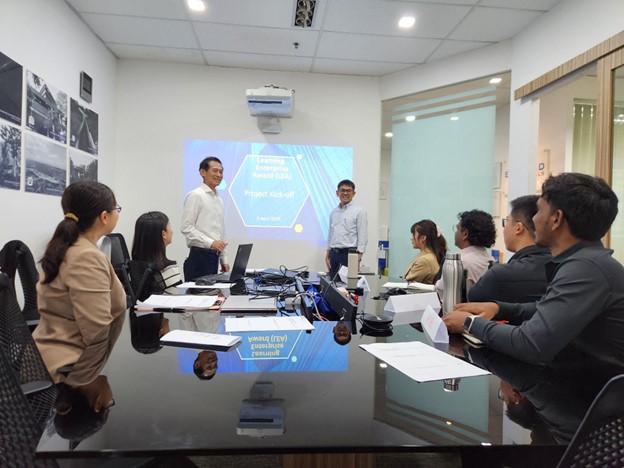
This was a reality ECAS Consultants Pte Ltd recognised at a pivotal stage of its growth. While the organisation had built a strong team of engineers and technical professionals, talent development and succession planning were largely addressed through annual appraisal discussions, without a formalised competency framework or structured career pathways. With increasing project demands and the need to ensure leadership continuity, ECAS saw the importance of moving towards a more systematic, sustainable approach to developing its people and preparing future leaders.
Founded in 1996, ECAS Consultants is a multidisciplinary engineering consultancy providing services across design consultancy, construction supervision, project management, accredited checking, and engineering assessment. Serving both public and private sector clients, including agencies such as the Land Transport Authority (LTA), Housing & Development Board (HDB), Public Utilities Board (PUB), and Changi Airport Group, ECAS has contributed to landmark infrastructure and development projects across Singapore.
To support its continued growth and uphold its values of Excellence, Commitment, Assurance, and Safety, ECAS embarked on a structured transformation of its talent management practices through the Learning Enterprise Alliance (LEA) Consultancy Project with the Institute for Adult Learning (IAL) in 2025.
Strengthening Talent Foundations for Future Growth
Engineering work today is increasingly specialised, with higher expectations for technical excellence, consistency, and leadership readiness. For organisations operating in Singapore’s built environment sector, the challenge is no longer just attracting capable engineers, but ensuring that skills development, performance expectations, and leadership succession are clearly defined and consistently applied as the organisation grows.This was an inflection point for ECAS. While the company had built a strong team of engineers and technical professionals, talent development and succession planning were largely addressed through annual appraisal discussions. Without a formalised competency framework or structured career pathways, expectations could vary across teams, and long‑term workforce planning relied heavily on individual judgement rather than a shared organisational approach.
Recognising the need to strengthen its talent foundations, ECAS set out to develop a more systematic framework to support its people and business growth. This included creating a customised competency framework tailored to ECAS’s engineering roles, establishing clearer career development pathways, and enhancing talent management and succession planning for senior leadership positions. Together, these elements would allow ECAS to better identify high‑potential employees, guide engineers in their professional development, and build a sustainable pipeline of future leaders.
Reflecting on this decision, Managing Director Er. Chan Ewe Jin shared,
“To support our growth, we need to implement a comprehensive Competency Framework, Career Development Framework, and Talent Management & Succession Planning Framework, to ensure better alignment with business strategy and optimise talent for future success.”
Partnering with IAL
Rather than addressing these challenges in isolation, ECAS adopted an integrated, organisation‑wide approach to talent development. Through the LEA consultancy project, ECAS partnered with IAL to co‑create a structured workplace learning solution that aligned people development with business strategy and operational realities.Working closely with ECAS’s leadership team, HR, and engineers, the project focused on three key outcomes:
- Developing a contextualised Competency Framework for ECAS engineers based on relevant industry skills frameworks
- Establishing a Career Development Framework to guide engineers’ professional growth and career progression
- Implementing a Talent Management and Succession Planning Framework to identify and nurture high-potential employees for leadership roles
A Structured and Collaborative Transformation Journey
The project began with a diagnostic phase, where interviews and focus group discussions were conducted with ECAS leadership, HR representative, and engineers. This allowed the project team to understand existing challenges, organisational needs, and staff perspectives on career development and performance management.
During the co-creation phase, IAL worked alongside ECAS to design frameworks that reflected the organisation’s engineering roles, workflows, and expectations.
Key deliverables included:
- A Contextualised Competency Framework defining critical technical and behavioural competencies required for ECAS engineers
- Needs Analysis tools to help engineers identify skill gaps and development priorities
- A Career Development Framework outlining structured progression pathways and professional development planning
- A Talent Management and Succession Planning Framework to identify and develop future leaders within the organisation
Looking back on the project, HR Manager Beattie Chan shared:
“It was a blessing to embark upon the learning journey, supported by the Management, project team, ECAS staff, and consultant. The comprehensive Competency Framework, Career Development Framework, and Talent Management & Succession Planning Framework have provided the mechanisms to sustain the improvements made. With ongoing commitment, this progress can continue to deliver lasting impact.”
From Insight to Impact: What ECAS Achieved
By the end of the LEA consultancy project, ECAS achieved several meaningful outcomes that strengthened its internal talent development capabilities.1. Greater Clarity in Competency and Skills Development
Through the newly implemented competency framework and needs analysis process, engineers gained clearer insight into the skills required for their roles and the areas they needed to strengthen.95% of engineers reported increased awareness and clarity regarding their competency gaps and career development opportunities.
This clarity allows ECAS engineers to take a more structured and proactive approach to their professional development.
2. Structured Career Development Pathways
The career development framework provided engineers with greater visibility into progression opportunities within ECAS. By linking career aspirations with competency development, the organisation strengthened engagement and demonstrated a clear commitment to investing in its people.3. Stronger Talent Management and Leadership Succession
Through the talent review process introduced during the project, ECAS leadership gained a clearer, more consistent view of high-potential employees within the organisation.This allows the company to systematically prepare future leaders and ensure continuity in key management roles.
Management feedback reflected strong confidence in the new approach, with 100% satisfaction reported regarding the effectiveness of the Talent Management and Succession Planning framework in identifying high-potential staff.
4. Workforce Capability Impact
The project is projected to impact 30 engineers, equipping them with structured development pathways, clearer expectations, and improved opportunities for career progression within the company.Reflecting on the results, Director Er. Tay Thiam Yeow, Titus shared:
“This project has been a good refresher on the importance of the Competency, Career Development, Talent Management & Succession Planning frameworks. It gives better clarity for both the management and staff. We now have a unified approach to this framework, to be finetuned as we proceed. The project is also our long-term commitment to continually improve HR practices for the good of the company and staff.”
Looking Ahead
Building on the success of the LEA consultancy project, ECAS plans to continue strengthening its people development practices through initiatives such as expansion of its career progression mechanism to additional job roles and sustained investment in employee development.By embedding structured talent management practices and fostering a culture of continuous learning, ECAS is better positioned to nurture its engineering talent, support leadership succession, and deliver high-quality engineering solutions for Singapore’s built environment sector.