 Back
Back
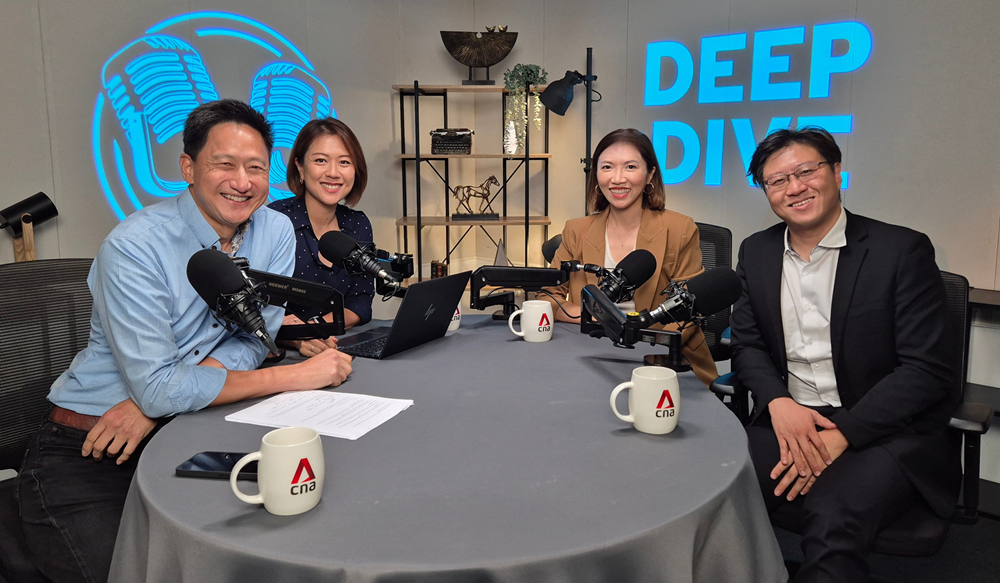
Why are younger workers leaving stable careers just a few years in? This question has surfaced repeatedly across sectors — from law to engineering — where attrition rates remain persistently high despite competitive salaries and structured career pathways.
At first glance, the explanation appears straightforward: younger workers today place greater emphasis on work-life balance, flexibility and personal fulfilment. But as discussed in a recent episode of CNA’s Deep Dive, the issue runs deeper than generational preferences. What we are witnessing is a broader shift in the social contract between employers and employees.
For decades, the implicit understanding was clear: education leads to stable employment, and in return for commitment and hard work, employees progress steadily through their careers. Today, that model is under strain. Workers are no longer content with stability alone—they are looking for growth, meaning and agency in their work.
This shift is not simply attitudinal. It reflects deeper changes in how work is organised, how skills are developed, and how value is created in an economy shaped increasingly by artificial intelligence (AI).
Beyond pay: The search for meaningful work
One of the key insights shared by Mr Edwin Tan, Director of the Centre for Skills-First Practices at the Institute for Adult Learning (IAL), is that workers today are looking beyond the paycheck.
Meaningfulness at work matters. This is not about abstract ideals, but about whether individuals feel that their work contributes to something of value—and whether they themselves are growing in the process.
Growth, in this context, has multiple dimensions. It includes the ability to:
• Apply one’s skills meaningfully
• Be recognised for those skills
• Continue developing capabilities over time
This is particularly important for younger workers entering the workforce. Many come equipped not only with formal qualifications, but also with skills acquired through informal learning, digital platforms and real-world experiences. Yet these capabilities are not always visible or recognised within traditional job structures.
If there can be a stronger alignment between what individuals can do and what their roles enable them to do, engagement grows. Over time, this supports retention.
Why job redesign matters
But first, if skills are to be used effectively, jobs themselves must evolve. Deliberate effort is needed for it to happen. Coordination and support is needed from leadership, and the involvement of the people doing the job, is needed for the maximisation of the impact of individual efforts remains limited.
Job redesign is not a new concept, but its importance has become more pronounced in the context of AI. As routine tasks are increasingly automated, the nature of work is shifting towards higher-order activities — such as problem-solving, decision-making and collaboration.
This is why job redesign must be seen as an organisational capability, not a one-off exercise. It involves:
• Rethinking how tasks are structured
• Redistributing work between humans and technology
• Creating opportunities for employees to apply and develop their skills
Importantly, it also requires open conversations between employers and employees—about aspirations, capabilities and how work can be better organised.
Towards better jobs
If the goal is to retain talent, the focus must move beyond compensation and benefits. What matters increasingly is the quality of jobs themselves.
A “good job” is not defined by a single attribute. It may mean different things to different individuals. But several common elements emerge:
• A sense of ownership and agency
• Opportunities for growth and development y
• The ability to apply and build on one’s skills
•A work environment that supports learning and contribution
Achieving this requires a shift in mindset. Rather than viewing roles as fixed, organisations need to see them as evolving configurations of tasks and capabilities.
It also calls for greater flexibility — not just in working arrangements, but in how careers are structured. Lateral moves, cross-functional projects and alternative career pathways can all play a role in enabling individuals to grow.
When organisations take the time to understand their people and unlock the skills already within, they build a sense of ownership — one that keeps talent engaged, growing and choosing to stay.
At first glance, the explanation appears straightforward: younger workers today place greater emphasis on work-life balance, flexibility and personal fulfilment. But as discussed in a recent episode of CNA’s Deep Dive, the issue runs deeper than generational preferences. What we are witnessing is a broader shift in the social contract between employers and employees.
For decades, the implicit understanding was clear: education leads to stable employment, and in return for commitment and hard work, employees progress steadily through their careers. Today, that model is under strain. Workers are no longer content with stability alone—they are looking for growth, meaning and agency in their work.
This shift is not simply attitudinal. It reflects deeper changes in how work is organised, how skills are developed, and how value is created in an economy shaped increasingly by artificial intelligence (AI).
Beyond pay: The search for meaningful work
One of the key insights shared by Mr Edwin Tan, Director of the Centre for Skills-First Practices at the Institute for Adult Learning (IAL), is that workers today are looking beyond the paycheck.
Meaningfulness at work matters. This is not about abstract ideals, but about whether individuals feel that their work contributes to something of value—and whether they themselves are growing in the process.
Growth, in this context, has multiple dimensions. It includes the ability to:
• Apply one’s skills meaningfully
• Be recognised for those skills
• Continue developing capabilities over time
This is particularly important for younger workers entering the workforce. Many come equipped not only with formal qualifications, but also with skills acquired through informal learning, digital platforms and real-world experiences. Yet these capabilities are not always visible or recognised within traditional job structures.
If there can be a stronger alignment between what individuals can do and what their roles enable them to do, engagement grows. Over time, this supports retention.
Why job redesign matters
But first, if skills are to be used effectively, jobs themselves must evolve. Deliberate effort is needed for it to happen. Coordination and support is needed from leadership, and the involvement of the people doing the job, is needed for the maximisation of the impact of individual efforts remains limited.
Job redesign is not a new concept, but its importance has become more pronounced in the context of AI. As routine tasks are increasingly automated, the nature of work is shifting towards higher-order activities — such as problem-solving, decision-making and collaboration.
This is why job redesign must be seen as an organisational capability, not a one-off exercise. It involves:
• Rethinking how tasks are structured
• Redistributing work between humans and technology
• Creating opportunities for employees to apply and develop their skills
Importantly, it also requires open conversations between employers and employees—about aspirations, capabilities and how work can be better organised.
Towards better jobs
If the goal is to retain talent, the focus must move beyond compensation and benefits. What matters increasingly is the quality of jobs themselves.
A “good job” is not defined by a single attribute. It may mean different things to different individuals. But several common elements emerge:
• A sense of ownership and agency
• Opportunities for growth and development y
• The ability to apply and build on one’s skills
•A work environment that supports learning and contribution
Achieving this requires a shift in mindset. Rather than viewing roles as fixed, organisations need to see them as evolving configurations of tasks and capabilities.
It also calls for greater flexibility — not just in working arrangements, but in how careers are structured. Lateral moves, cross-functional projects and alternative career pathways can all play a role in enabling individuals to grow.
When organisations take the time to understand their people and unlock the skills already within, they build a sense of ownership — one that keeps talent engaged, growing and choosing to stay.
Watch the full episode of Deep Dive on Youtube or listen to it here.