 Back
Back
What does it take to grow a heritage business in today’s economy?
For Nyonya kebaya boutique Rumah Kim Choo, the answer does not lie in only making the products cheaper or faster, but in changing how its people contribute to business growth.
The name “Kim Choo” is a familiar one, tracing back to 1945 when Peranakan businesswoman Mdm Lee Kim Choo established her shop famed for Nyonya rice dumplings and snacks. Three generations on, her grandson Mr Raymond Wong has expanded the legacy, bringing the craft into new forms such as Nyonya kebayas and beaded slippers.
Today, the boutique atelier is positioning itself as a thought leader in the Peranakan lifestyle. It creates handcrafted pieces for both corporate and individual clients, and has gained cultural visibility, including designing kebayas for the 2025 drama Emerald Hill.
But as interest in Peranakan culture surged, fuelled by UNESCO inscription of the Nyonya kebaya as intangible cultural heritage, media exposure, and initiatives like the SG Culture Pass, the business faces a harder question: how do you scale heritage without diluting it?
For Mr Wong, director of Rumah Kim Choo, the answer lies in its people.
A business at an inflection point
By 2024, the company had identified three clear priorities.
First, it needed to differentiate itself by focusing on bespoke, high-value kebayas rather than competing with mass-produced alternatives. Second, it wanted to expand beyond retail into cultural experiences. Third, it aimed to take its offerings into the wider Southeast Asian region.
Each of these moves required something the business did not yet fully have: a workforce that could carry heritage with authority. Internally, capabilities were uneven. Artisans had strong technical skills but varying levels of cultural knowledge. Frontline staff could handle transactions but were less confident in storytelling or styling. Across the team, roles were not clearly defined, leading to inconsistencies in customer experience.
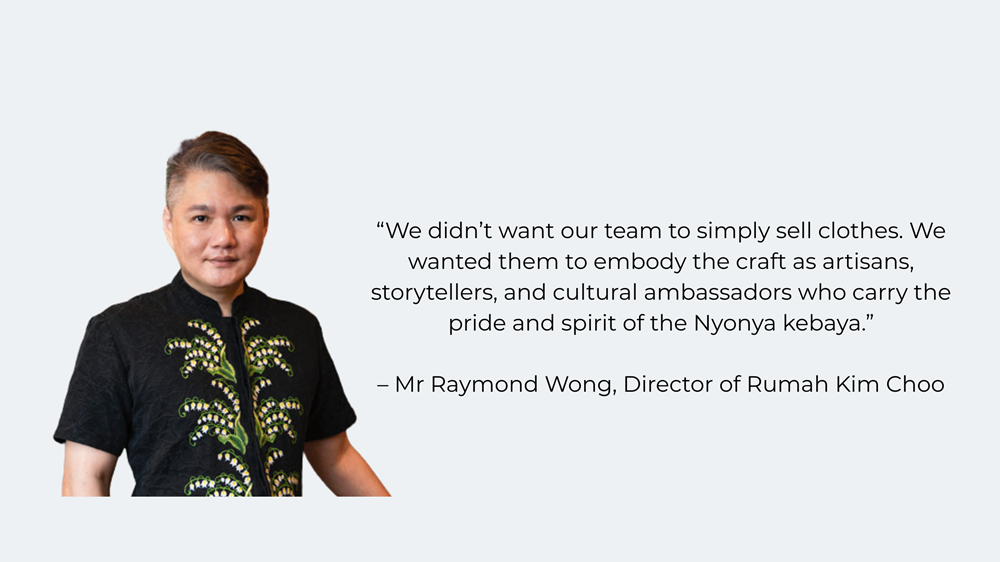
“Heritage products are perceived as expensive because customers don’t know how to value handicraft work. Even in the age of AI, our craft remains rooted in handiwork. Lace still has to be made by hand. This makes our work costly in terms of artisanal craftsmanship,” Mr Wong explains. “Lack of heritage knowledge means customers cannot deeply appreciate heritage products.”
Simply put, if customers did not understand the craft, they would not pay for it. And if staff could not explain it, the business could not grow.
Rethinking the role of the employee
What Rumah Kim Choo needed was a fundamental shift in how its people contributed to the business. To differentiate through higher-end products and curated experiences, employees had to take on a different role, that of a heritage ambassador who could explain, style, and curate, not just produce and sell.
As interest in Peranakan culture continues to grow, Rumah Kim Choo recognised the urgent need to strengthen its people capabilities.
The clear vision prompted Rumah Kim Choo to embark on a Learning Enterprise Alliance project with IAL. The aim was not just to retrain staff, but to redesign roles and build capabilities aligned with its growth strategy.
“The question IAL’s consultant posed was: what is our key goal? For us, it was ensuring our colleagues understand the culture, history and styling behind each piece. With stronger storytelling skills, they’ve become more engaging and proactive with clients,” Mr Wong adds.
Diagnosing the gaps, co-creating solutions
The project began with a structured diagnosis. Through interviews and surveys, the company mapped its business direction against existing capabilities. Three key issues emerged.
First, inconsistent knowledge of Peranakan culture affected both heritage accuracy and customer experience. Second, unclear job scopes led to inefficiencies and weak customer engagement. Third, the team lacked the facilitation and storytelling skills needed to deliver cultural workshops.
Rather than importing a generic training solution, the next phase focused on co-creation.
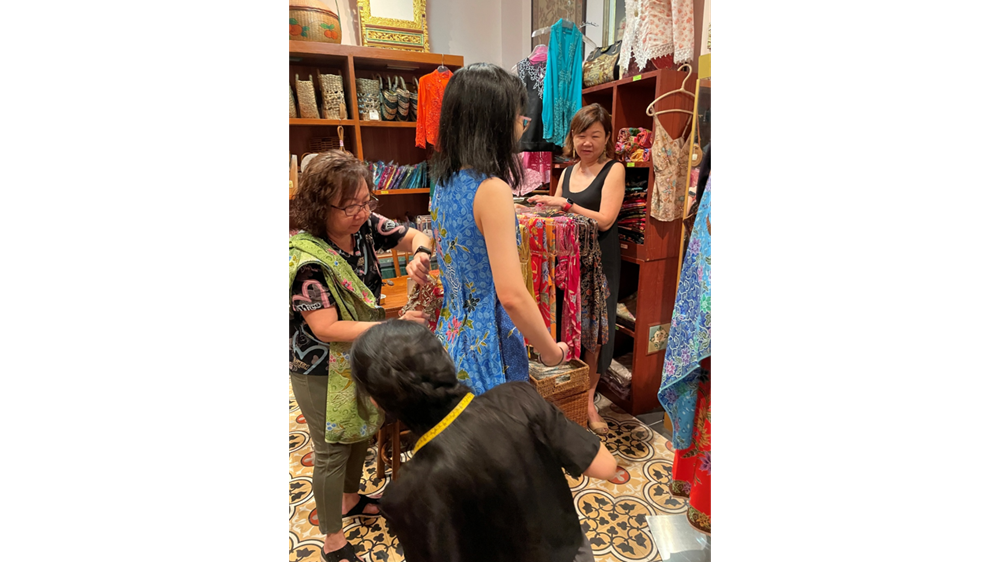
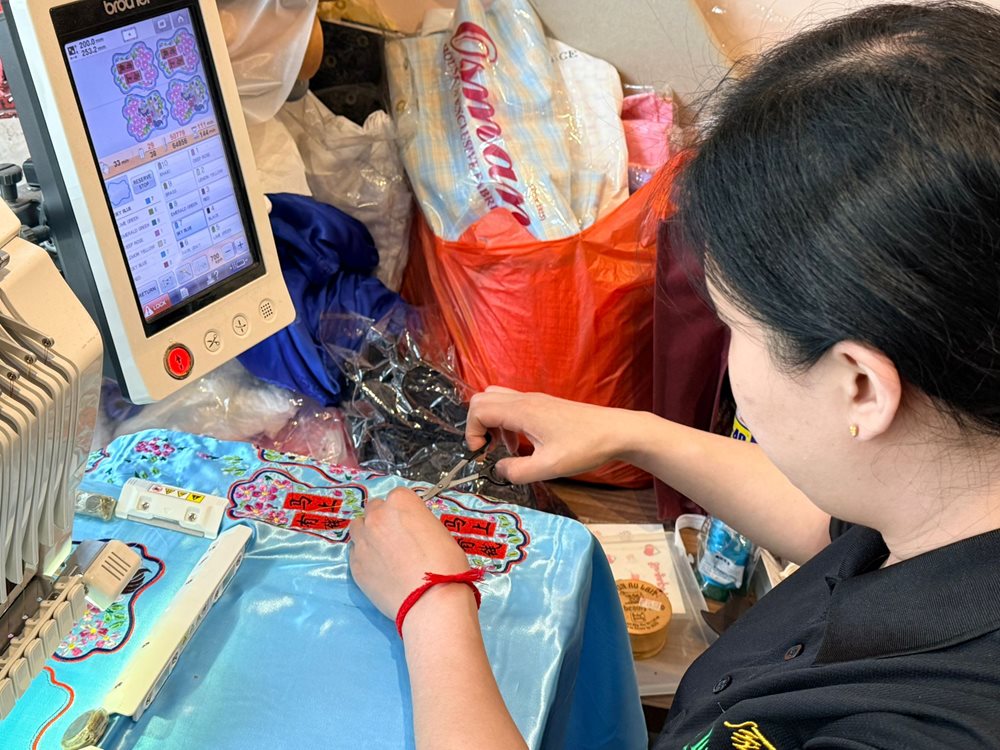
Learning continues in the shop floor where customer interaction happens. (Photo provided by Rumah Kim Choo)
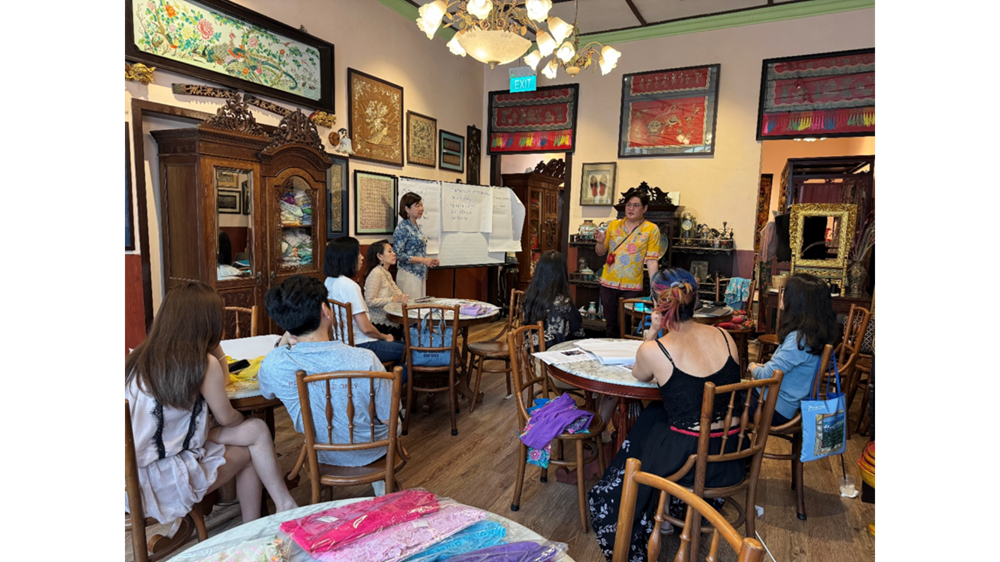
In the process of workplace consultancy, Rumah Kim Choo unlocked a new revenue stream in conducting heritage workshops for public utilising their SG Culture pass. (Photo provided by Rumah Kim Choo)
A turning point came when the team began applying their learning beyond internal training.
With support from the consultant, Rumah Kim Choo launched public workshops under the SG Culture Pass, giving the staff a platform to practise facilitation while opening a new revenue stream. The results were immediate. Many participants in the workshops went on to purchase bespoke kebayas after gaining appreciation for the craft. Learning became a direct driver of sales.
Within three months, the workshops reached more than 50 customers, with trained staff co-facilitating alongside Mr Wong, demonstrating that learning could be translated into business outcomes.
“When our workplace transformation started with a clear vision of where the business is headed, learning becomes realistic and not theoretical. I get higher buy-in from my employees, and they get to apply what they have learnt,” Mr Wong reflects.
Employees also took to their new roles. Artisans once narrowly focused on craft began taking pride in their role as cultural carriers. Mr Wong observes, “In the past, our employees worked in silos, each sticking closely to their own job scope. Today, this has changed. They engage customers directly, exchange ideas, work together more seamlessly, offering feedback on designs and suggesting changes to better capture new customers.”
This blending of craft and narrative also influenced product innovation. The team developed a signature kebaya inspired by the Vanda Miss Joaquim, integrating traditional techniques with national symbolism.
For Nyonya kebaya boutique Rumah Kim Choo, the answer does not lie in only making the products cheaper or faster, but in changing how its people contribute to business growth.
The name “Kim Choo” is a familiar one, tracing back to 1945 when Peranakan businesswoman Mdm Lee Kim Choo established her shop famed for Nyonya rice dumplings and snacks. Three generations on, her grandson Mr Raymond Wong has expanded the legacy, bringing the craft into new forms such as Nyonya kebayas and beaded slippers.
Today, the boutique atelier is positioning itself as a thought leader in the Peranakan lifestyle. It creates handcrafted pieces for both corporate and individual clients, and has gained cultural visibility, including designing kebayas for the 2025 drama Emerald Hill.
But as interest in Peranakan culture surged, fuelled by UNESCO inscription of the Nyonya kebaya as intangible cultural heritage, media exposure, and initiatives like the SG Culture Pass, the business faces a harder question: how do you scale heritage without diluting it?
For Mr Wong, director of Rumah Kim Choo, the answer lies in its people.
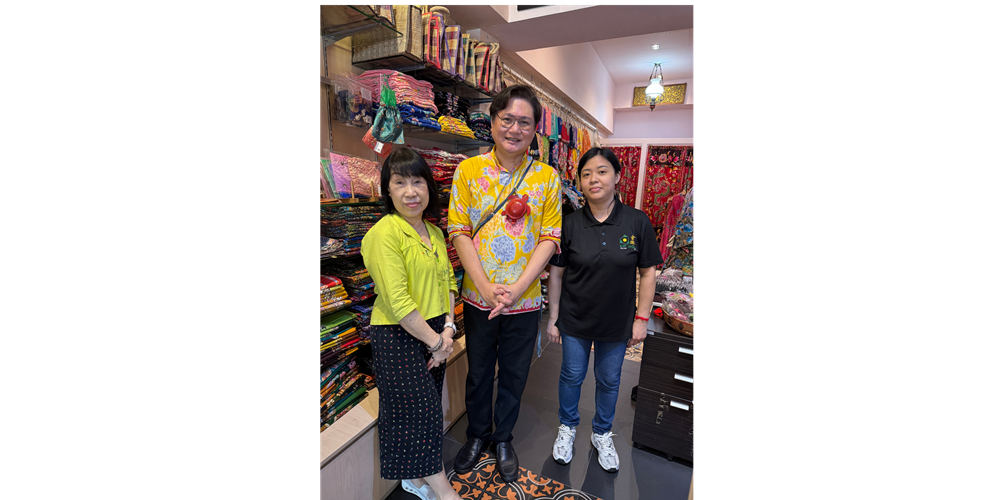
Mr Raymond Wong and his team at Rumah Kim Choo (Photo provided by Rumah Kim Choo)
A business at an inflection point
By 2024, the company had identified three clear priorities.
First, it needed to differentiate itself by focusing on bespoke, high-value kebayas rather than competing with mass-produced alternatives. Second, it wanted to expand beyond retail into cultural experiences. Third, it aimed to take its offerings into the wider Southeast Asian region.
Each of these moves required something the business did not yet fully have: a workforce that could carry heritage with authority. Internally, capabilities were uneven. Artisans had strong technical skills but varying levels of cultural knowledge. Frontline staff could handle transactions but were less confident in storytelling or styling. Across the team, roles were not clearly defined, leading to inconsistencies in customer experience.
“Heritage products are perceived as expensive because customers don’t know how to value handicraft work. Even in the age of AI, our craft remains rooted in handiwork. Lace still has to be made by hand. This makes our work costly in terms of artisanal craftsmanship,” Mr Wong explains. “Lack of heritage knowledge means customers cannot deeply appreciate heritage products.”
Simply put, if customers did not understand the craft, they would not pay for it. And if staff could not explain it, the business could not grow.
Rethinking the role of the employee
What Rumah Kim Choo needed was a fundamental shift in how its people contributed to the business. To differentiate through higher-end products and curated experiences, employees had to take on a different role, that of a heritage ambassador who could explain, style, and curate, not just produce and sell.
As interest in Peranakan culture continues to grow, Rumah Kim Choo recognised the urgent need to strengthen its people capabilities.
The clear vision prompted Rumah Kim Choo to embark on a Learning Enterprise Alliance project with IAL. The aim was not just to retrain staff, but to redesign roles and build capabilities aligned with its growth strategy.
“The question IAL’s consultant posed was: what is our key goal? For us, it was ensuring our colleagues understand the culture, history and styling behind each piece. With stronger storytelling skills, they’ve become more engaging and proactive with clients,” Mr Wong adds.
Diagnosing the gaps, co-creating solutions
The project began with a structured diagnosis. Through interviews and surveys, the company mapped its business direction against existing capabilities. Three key issues emerged.
First, inconsistent knowledge of Peranakan culture affected both heritage accuracy and customer experience. Second, unclear job scopes led to inefficiencies and weak customer engagement. Third, the team lacked the facilitation and storytelling skills needed to deliver cultural workshops.
Rather than importing a generic training solution, the next phase focused on co-creation.
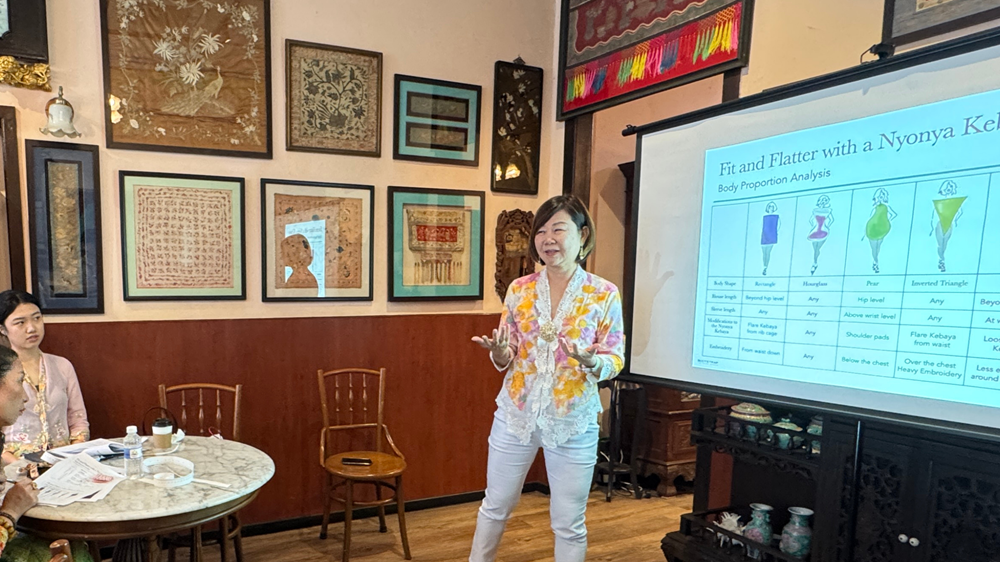
Dr Lynda Wee, IAL workplace consultant conducting a workshop for Rumah Kim Choo’s staff and partners. (Photo by Rumah Kim Choo)
Working with IAL consultant, Dr Lynda Wee, Rumah Kim Choo developed a set of materials and frameworks grounded in its own business model. This included:
• A redesigned job role for Peranakan Heritage Ambassadors
• Content for storytelling and cultural interpretation
• Structured templates for bespoke kebaya design, including body proportion analysis, colour profiling, and embroidery (sulam) design
• Material and framework for creating a workshop on personalising kebaya.
To support this, the team also applied tools like customer journey mapping to identify service gaps and create more meaningful touchpoints.
• A redesigned job role for Peranakan Heritage Ambassadors
• Content for storytelling and cultural interpretation
• Structured templates for bespoke kebaya design, including body proportion analysis, colour profiling, and embroidery (sulam) design
• Material and framework for creating a workshop on personalising kebaya.
To support this, the team also applied tools like customer journey mapping to identify service gaps and create more meaningful touchpoints.
Learning continues in the shop floor where customer interaction happens. (Photo provided by Rumah Kim Choo)
Learning on the shop floor
Implementation took a pragmatic, workplace-based approach.
Staff and partners attended short, focused workshops, each run in manageable four-hour blocks, to accommodate operational constraints. This was followed by one-on-one coaching on the shop floor, where learning could be applied immediately.
The approach addressed real constraints such as initial resistance from staff, particularly those more comfortable focusing on technical craft than customer interaction, and language barriers, as many team members were Mandarin-speaking.
These were mitigated through co-created job design, management support, and practical coaching that translated concepts into day-to-day tasks.
Implementation took a pragmatic, workplace-based approach.
Staff and partners attended short, focused workshops, each run in manageable four-hour blocks, to accommodate operational constraints. This was followed by one-on-one coaching on the shop floor, where learning could be applied immediately.
The approach addressed real constraints such as initial resistance from staff, particularly those more comfortable focusing on technical craft than customer interaction, and language barriers, as many team members were Mandarin-speaking.
These were mitigated through co-created job design, management support, and practical coaching that translated concepts into day-to-day tasks.
In the process of workplace consultancy, Rumah Kim Choo unlocked a new revenue stream in conducting heritage workshops for public utilising their SG Culture pass. (Photo provided by Rumah Kim Choo)
From learning to revenue
A turning point came when the team began applying their learning beyond internal training.
With support from the consultant, Rumah Kim Choo launched public workshops under the SG Culture Pass, giving the staff a platform to practise facilitation while opening a new revenue stream. The results were immediate. Many participants in the workshops went on to purchase bespoke kebayas after gaining appreciation for the craft. Learning became a direct driver of sales.
Within three months, the workshops reached more than 50 customers, with trained staff co-facilitating alongside Mr Wong, demonstrating that learning could be translated into business outcomes.
“When our workplace transformation started with a clear vision of where the business is headed, learning becomes realistic and not theoretical. I get higher buy-in from my employees, and they get to apply what they have learnt,” Mr Wong reflects.
Employees also took to their new roles. Artisans once narrowly focused on craft began taking pride in their role as cultural carriers. Mr Wong observes, “In the past, our employees worked in silos, each sticking closely to their own job scope. Today, this has changed. They engage customers directly, exchange ideas, work together more seamlessly, offering feedback on designs and suggesting changes to better capture new customers.”
This blending of craft and narrative also influenced product innovation. The team developed a signature kebaya inspired by the Vanda Miss Joaquim, integrating traditional techniques with national symbolism.
Building a learning-driven business
By the end of the project, the outcomes were both concrete and systemic.
Ten employees and partners were trained as heritage ambassadors, and all of them reported that the training was relevant and applicable to their work. Job roles became clearer, and service delivery more consistent.
More importantly, the company had embedded a learning culture aligned to its strategic direction. “The project has helped us embarked on people development. The IAL consultant also ensured that all learning is work-related and delivered real business results,” Mr Wong shares.
Rumah Kim Choo’s journey challenges the common assumption that capability-building is the domain of large firms. Rather, it is just as critical in a boutique, craft-based business. The company set out to differentiate through bespoke artisanry but discovered that its true differentiator lies in the people who make it and carry its story forward.
Ten employees and partners were trained as heritage ambassadors, and all of them reported that the training was relevant and applicable to their work. Job roles became clearer, and service delivery more consistent.
More importantly, the company had embedded a learning culture aligned to its strategic direction. “The project has helped us embarked on people development. The IAL consultant also ensured that all learning is work-related and delivered real business results,” Mr Wong shares.
Rumah Kim Choo’s journey challenges the common assumption that capability-building is the domain of large firms. Rather, it is just as critical in a boutique, craft-based business. The company set out to differentiate through bespoke artisanry but discovered that its true differentiator lies in the people who make it and carry its story forward.